Orogenic Processes and Resources & Environment
Total hours: 16
Teaching activity: classroom teaching
Time: May 13–15, 8:30–12:00 (Morning)
Venue:
May 13 (Wed) & May 14 (Thu): Room A0509, East Campus Teaching Complex Building, Nanwangshan Campus
May 15 (Fri): Room B0401, East Campus Teaching Complex Building, Nanwangshan Campus
Course lecturers: Prof. Franz Neubauer;Teaching Assistants Dr. Dong Yanlong and Dr. Zhan Lefan
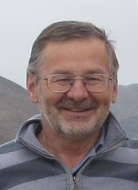
Distinguished Geologist & Academician Franz Neubauer: Bridging European and Asian Tectonics
Prof. Dr. Franz Neubauer, a Member of the Academia Europaea and Professor Emeritus at the University of Salzburg, stands as a preeminent authority in Tectonics and Geochronology. He awarded Eduard Suess Medal (Austrian Geological Society). Prof. Neubauer brings a wealth of leadership experience, having served as President of the Carpatho-Balkan Geological Association and over than years in the European Research Council (ERC) panels. With over 45 years of research experience, his seminal work focuses on the evolution of collisional orogens, spanning the Tethyan mountain belt from Eastern Alps, Carpathians, Iran and Altyn-Kunlun and Qinling Mts. He published more than 380 peer-reviewed quality journal papers, 16 Published Mapping Reports (Austrian Geological Map 1: 50,000), 6 Published Geological Maps, was awarded several honorary professorships and awards and his scientific impact is profound, with an H-index of over 80 and over 25000 citations. His recent 2026 publications continue to refine our understanding of pre-Alpine and Tethyan tectonic evolution, solidifying his status as a global leader in Earth Sciences. Notably, he maintains deep collaborative ties with major Chinese institutions, including the China University of Geosciences (Wuhan; since 1997!), Northwest University (Xi'an), Peking University, Ocean University of Qingdao, and Jilin University.
Course introduction:
Course Title: Orogenic Processes: Resources and Environment
Situated at the forefront of Earth System Science and driven by the synergy of big data and artificial intelligence, this course systematically investigates the deep geodynamic mechanisms of orogeny and their non-linear coupling with surface resource formation and ecological evolution. Designed to transcend the boundaries of traditional geology, the curriculum unveils the profound impacts of mountain uplift on Earth's surface material-energy cycles, resource distribution, and environmental patterns.
Teaching Objectives:
By integrating theoretical instruction and case studies, students will master cutting-edge methodologies in orogenic research. The course aims to cultivate a deep understanding of the tectonic contexts governing resources and environments, equipping students with the interdisciplinary expertise to address complex challenges in resource exploration, disaster mitigation, and sustainable development.
Teaching Arrangement:
(1) The Alps compared to other Mountain Belts: Consequences of Climate Change for Hazards and Ecoystems
(2) Integrating small-scale observations to plate tectonic processes
(3) The long history of mountains: the Alpine-Himalayan mountain belt from Alps to Iran
Short description to (1): 4 hours
The man-induced present-day rapid climate change makes mountains vulnerable and poses serious problems to the populations living there. Examples for climate change induced effects (mainly increase of temperature) are: dramatic decrease of mountain slope stability by migration of the permafrost to higher elevations, thread by landsliding and flooding, loss of glaciers and their water storage capacity, and much lower snow cover. The workshop is aimed to reveal the nature of these effects on mountains. Mountains result from the interplay of active constructing processes by plate convergence and destroying processes by rock weathering and erosion, the latter are strongly influenced by climate change effects, particularly by higher temperature and rainfall/snow.
Short description to (2): 4 hours
Revealing mountain building processes is based on a multitude of sophisticated methods, which are seemingly divided into numerous subdisciplines. The aim of this lecture is to show that integration of results from various subdisciplines allows a much better a detailed and complete view of mountain building processes. A further aim is to show how the development of new methods allow entirely new insights into specific processes.
Short description to (3): 4 hours
This part is aimed to show how plate tectonic processes are much more long-lasting as envisaged before. On the example of the Alpine-Himalayan mountain belt between Alps to Iran, these processes are shown and how numerous resources are also created by multiple overlapping plate tectonic processes.
Short description to (4): 4 hours
Discussion and communications