From July 20 to 24, the 2026 Summer Internship Program for Chinese Government Atomic Energy Scholarship recipients and the "Experience China-Nuclear Science Tour" study tour concluded successfully in Beijing. Co-hosted by the China Atomic Energy Authority and the China Scholarship Council, the event was jointly organized by Harbin Engineering University and the International Student Education Branch of the China Nuclear Industry Education Society.
A total of 51 international students from four institutions — Harbin Engineering University, Sichuan University, Xi’an Jiaotong University and China University of Geosciences — joined the initiative. Included among the participants were three CUG students: Egyptian PhD student AHMED MOHAMED ABDALLAH IBRAHIM, Ethiopian PhD student ABRHAM KUSSBILO DATIKO, and Yemeni master’s student ELYAS MOHAMMED ABDO SAEED RADMAN.
Centered on China’s nuclear industry chain, the study tour encompassed uranium exploration, fundamental research, reactor engineering, irradiation industry and isotope medical applications. It provided participants with first-hand insights into China’s nuclear technology capabilities and its philosophy of peaceful nuclear utilization.
From July 21 to 24, participants visited multiple nuclear industry institutions, covering uranium exploration, reactor engineering, irradiation applications, isotope medicine and nuclear safety regulation. At China Institute of Atomic Energy, the group conducted on-site visits to facilities including advanced research reactors, experimental fast reactors and high-intensity proton cyclotrons, to learn about the current progress of nuclear physics and radiation monitoring technologies in China. Subsequent stops included Jinhui Irradiation Company, China Nuclear Industry Science and Technology Museum and Atom Hi-Tech North China Pharmaceutical Company, where participants learned about the development history of China’s nuclear industry and the civilian applications of irradiation and isotope technologies. The delegation also toured the Changyang site of the State Nuclear Security Technology Center and the Nuclear and Radiation Safety Center, inspecting experimental facilities, a reactor main control simulator and an emergency command hall to understand the operational framework of China’s nuclear safety regulatory system. In addition, participants observed the clinical application of isotope technologies at Peking Union Medical College Hospital and visited the Beijing Research Institute of Uranium Geology to gain an understanding of uranium exploration technologies as well as the links between uranium resources and the nuclear energy industrial chain.
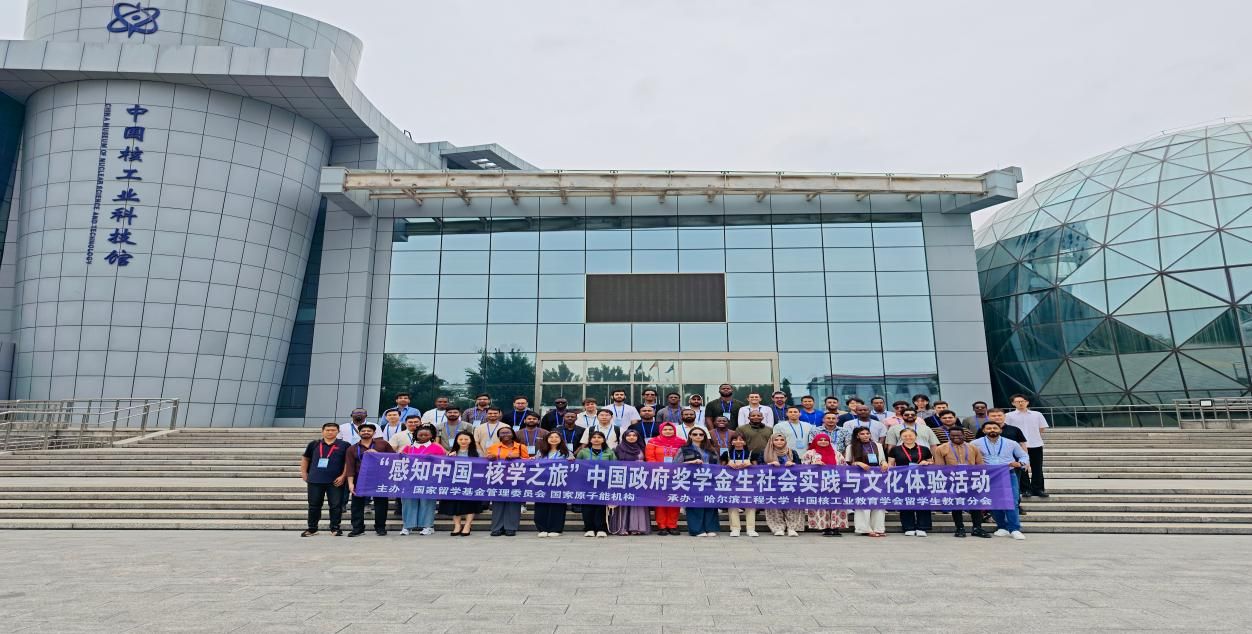
Visit China Nuclear Industry Science and Technology Museum
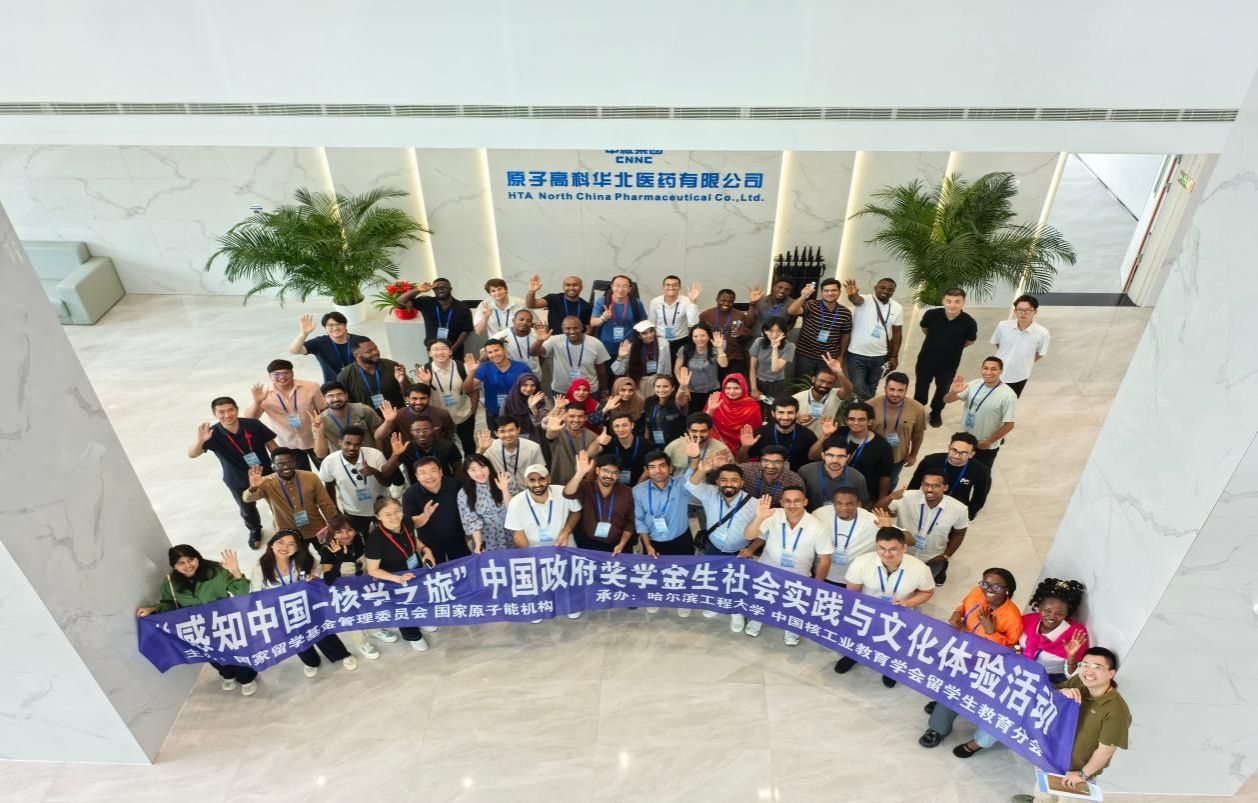
Visit HTA North China Pharmaceutical Co., Ltd
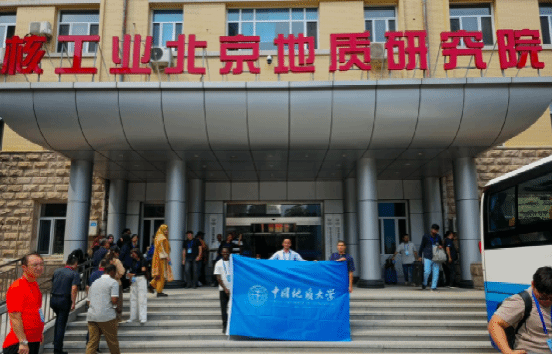
Participants from CUG
ELYAS MOHAMMED ABDO SAEED RADMAN, a Yemeni master’s student from CUG, commented: “This study tour stands as one of the most valuable academic experiences during my master’s studies. It has enabled me to build a more holistic understanding of nuclear science and sharpened my awareness of the responsibilities I bear as a geoscience student. This experience has made it clear that the stable advancement of cutting-edge technologies relies not merely on hardware, but also on reliable data, skilled professionals, accumulated institutional expertise, multi-party collaboration, and professional integrity that embeds safety principles into every decision. I will bring these insights into my research on mineral resources and future geological survey work in Yemen.”
AHMED MOHAMED ABDALLAH IBRAHIM, an Egyptian PhD student from CUG, shared: “This five-day program was well-structured and progressive, which completely overturned my preconception that nuclear energy is used solely for power generation. The program made me acutely aware that China’s nuclear science extends far beyond large-scale nuclear power production, spanning research endeavors, industrial manufacturing, healthcare and resource exploration. It allowed me to fully grasp how domestic nuclear research institutes, state-owned enterprises and regulatory authorities collaborate to advance nuclear energy and non-power nuclear applications. It also embodies the original vision of such international exchange programs for fostering global cooperation.”